Rodent Contamination in Your Attic: What Homeowners Can’t See
You heard scratching above the ceiling. Maybe you found a few droppings. The rodents were trapped or removed, the noises stopped, and the problem seemed solved. But there’s another question homeowners should ask: what did those rodents leave behind?

Droppings and urine staining are often just the visible portion of a much larger contamination issue.
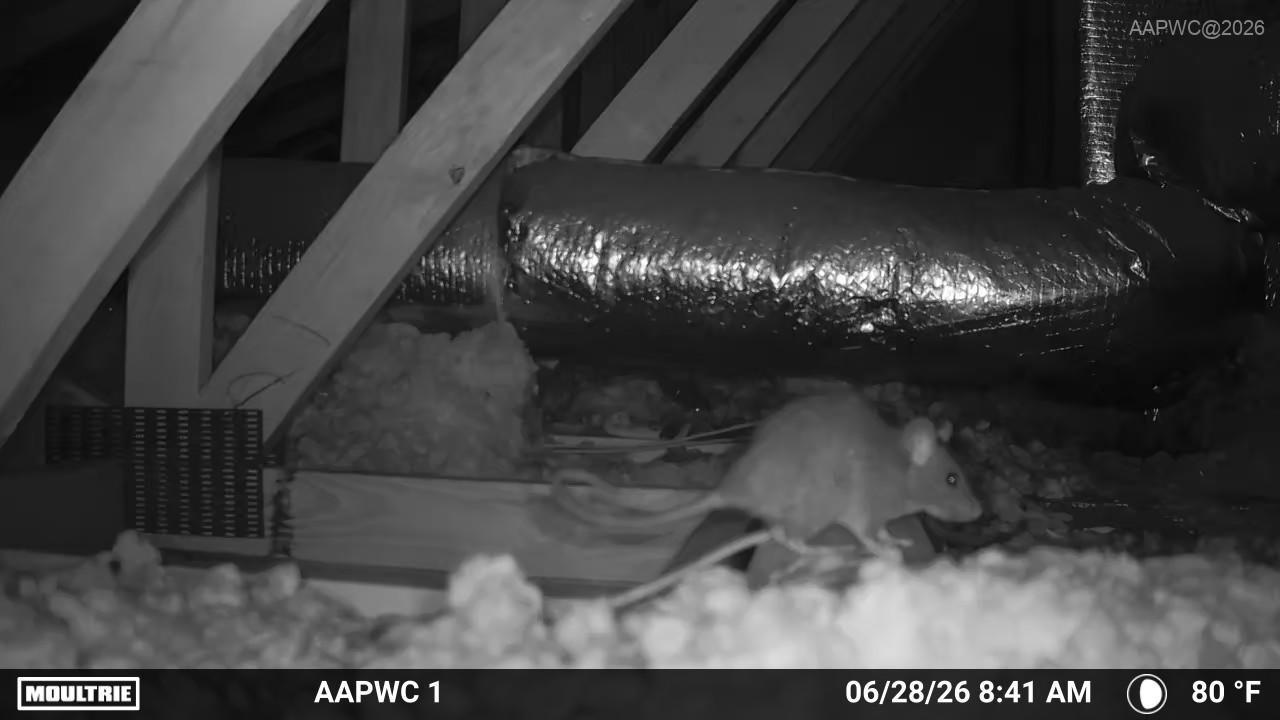
An attic can hide evidence of a rodent infestation long after the rodents themselves are gone. Droppings, urine, nesting materials, damaged insulation, food debris, carcasses, and other contamination can remain in areas homeowners rarely see. Removing the rodents is important. But sometimes, removing the rodents is only the first part of restoring the attic.
What Do Rodents Leave Behind in an Attic?
Rats and mice don’t simply walk through an attic. Once they establish themselves inside, they may eat, nest, travel, urinate, defecate, and reproduce there. Over time, an infestation can leave behind:
- Rodent droppings
- Urine contamination
- Nesting materials
- Contaminated insulation
- Food and nesting debris
- Damaged materials
- Dead rodents
- Odors
Some contamination may be obvious. Much of it may be buried underneath or throughout the insulation. That’s why looking through the attic access and saying “I don’t see anything” doesn’t necessarily tell you what’s happening across the entire attic.
Can Rodent Contamination Affect Indoor Air Quality?
Rodent contamination should be taken seriously. The EPA identifies rodents and their waste among the biological contaminants found indoors. The EPA also notes that proteins in rat and mouse urine can be potent allergens, and that those proteins can become airborne once the urine dries.
That doesn’t mean every home with a rat in the attic automatically has dangerous indoor air. It does mean rodent contamination isn’t something homeowners should casually ignore or stir into the air.
Don’t Just Vacuum Rodent Droppings
This is especially important. If you find rodent droppings in an attic, garage, cabinet, storage area, or other part of your home, don’t immediately grab a broom or household vacuum.
The CDC specifically advises against vacuuming or sweeping rodent urine, droppings, or nesting material, since doing so can cause contaminated particles to become airborne. Instead, the CDC recommends using appropriate precautions and disinfecting contaminated material before removal. Heavily infested areas may require additional protective measures.
What About Contaminated Attic Insulation?
Insulation creates an enormous amount of surface area where rodent contamination can occur. Rodents may travel across it, burrow through it, create nesting areas, and contaminate sections with urine and droppings. CDC cleanup guidance addresses contaminated insulation directly, recommending that exposed insulation contaminated with urine and droppings be placed into plastic bags for removal.
The extent of contamination matters. A small, localized incident is very different from years of rodent activity throughout an attic. That’s why inspection should come before assuming the entire attic needs to be removed, or assuming that none of it does.

Widespread nesting and contamination like this typically requires full remediation rather than spot cleaning.
Signs of Rodent Contamination in an Attic
You may have a contamination issue if you notice the following:
Warning signs to look for:
- Rodent droppings
- Urine staining
- Persistent attic odors
- Nesting materials
- Tunnels or trails through insulation
- Compressed or disturbed insulation
- Dead rodents
- Chewed materials
- Evidence of long-term rodent activity
- Previous infestations that were never cleaned
Some homeowners discover contamination while addressing an active rodent problem. Others discover it years later during HVAC, electrical, roofing, or insulation work.
Getting the Rats Out Isn’t Enough if They Can Come Back
Attic restoration shouldn’t begin with insulation. It should begin with why the rodents got into the attic in the first place. If you remove contaminated insulation and install beautiful new insulation without addressing rodent entry points, you’ve essentially renovated the rodents’ apartment.
The CDC recommends checking inside and outside the home for openings and sealing gaps and holes to help prevent rodents from returning. Areas of concern can include rooflines, eaves, soffits, attic vents, utility penetrations, foundations, doors, and other openings.
That’s why a comprehensive approach may look like this:
The exact process depends on the property.
When Does an Attic Need Restoration?
Not every rodent problem requires a complete attic restoration. Sometimes contamination is localized and can be appropriately addressed without removing all the insulation. Other situations involve extensive contamination, damaged insulation, strong odors, widespread nesting, or years of activity. An attic evaluation can help determine how widespread the activity appears to be, whether rodents are still present, where they may be entering, whether insulation has been contaminated or damaged, and whether localized cleanup or more extensive restoration should be considered.
What Does Attic Restoration After Rodents Involve?
Depending on conditions, attic restoration may include removal of contaminated materials and insulation, appropriate cleanup and sanitation, rodent exclusion, air-sealing opportunities, installation of new insulation, and restoring consistent insulation coverage.
The goal isn’t simply to make the attic look clean. It’s to address what happened, reduce remaining contamination where appropriate, restore damaged materials, and help prevent the same problem from happening again.
Contamination doesn’t make noise — that’s why it can remain long after the scratching stops.
The Part of a Rodent Problem You Don’t Hear
Scratching noises get homeowners’ attention because they’re impossible to ignore. Contamination doesn’t make noise. If you’ve had rats or mice in your attic, particularly a long-term or heavy infestation, it may be worth having the attic evaluated rather than assuming the problem ended when the scratching stopped.
Had Rodents in Your Attic?
All American Pest & Wildlife Control provides rodent control, exclusion, attic inspections, and attic restoration throughout Southeast Louisiana and the Mississippi Gulf Coast.