
High Energy Bills in Louisiana? Your Attic Could Be the Problem
Your AC seems to run all day. One bedroom never gets as cool as the others. The thermostat says one thing, but parts of the house feel completely different. Then the electric bill arrives.
If you’re dealing with high energy bills in Louisiana, there are many possible causes. Your HVAC system, thermostat settings, windows, ductwork, appliances, air leakage, and even changes in utility rates can all play a role. But there’s one place homeowners frequently overlook: the attic.
Your attic sits directly between your living space and one of the hottest surfaces around your home — the roof. If the insulation and air-sealing system above your ceiling isn’t performing properly, your HVAC system may be fighting a battle you can’t see.
Why Your Attic Matters So Much in Louisiana
Louisiana homes experience long periods of heat and humidity. Your roof absorbs solar heat, and the attic beneath it becomes part of the thermal environment surrounding your conditioned living space. In a typical vented attic, insulation installed along the attic floor helps separate that unconditioned attic from the rooms below.
The Department of Energy identifies attics as a common source of home heat-energy loss and emphasizes the importance of keeping the insulation layer aligned with the home’s air barrier. When that system isn’t performing well, maintaining comfortable indoor temperatures can become more difficult.
Can Poor Attic Insulation Increase Energy Bills?
It can contribute. Insulation resists heat transfer, and the effectiveness of insulation is measured using its R-value — higher R-values provide greater resistance to heat flow when the insulation is properly installed. ENERGY STAR notes that properly installed high-R attic insulation can contribute to homes requiring less heating and cooling while providing more consistent comfort.
But insulation isn’t an on/off switch. You don’t simply either have insulation or not have insulation — its condition matters.
Signs Your Attic Could Be Contributing to High Energy Bills
A high electric bill alone doesn’t prove you have an insulation problem. But when high bills occur alongside other symptoms, your attic may be worth investigating.
Watch for these symptoms together:
- AC running for long periods
- Certain rooms consistently feeling warmer
- Upstairs rooms that are difficult to cool
- Large temperature differences between rooms
- Thin or uneven attic insulation
- Visible bare areas on the attic floor
- Insulation that has been compressed or moved
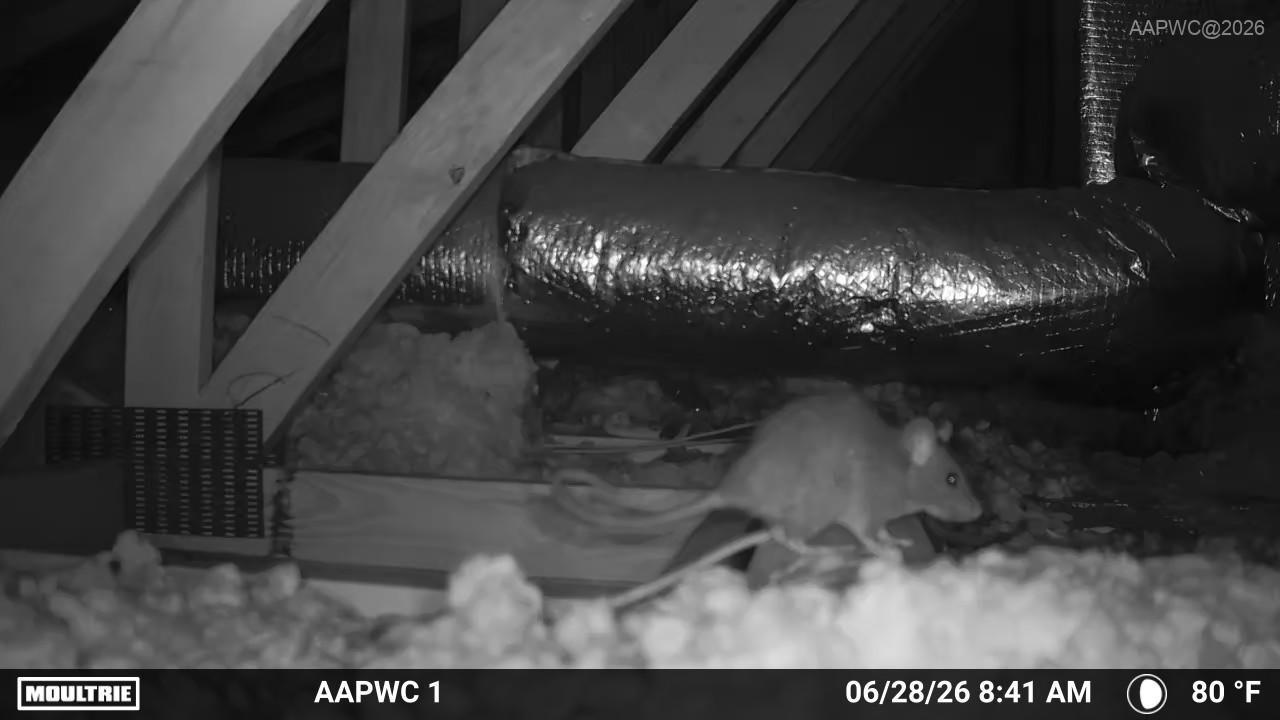
- Rodent or wildlife activity in the attic
- Older insulation of unknown condition
- A home that struggles to maintain the thermostat setting
These symptoms can have multiple causes, so the goal should be diagnosis rather than immediately assuming more insulation is the answer.
How R-Value Affects Your Home
R-value measures resistance to heat flow. The type of insulation and its thickness both affect the R-value provided by the insulation system, and for Louisiana homeowners, that thermal resistance becomes particularly important during the long cooling season.
But there’s another piece homeowners sometimes miss: the R-value you’re supposed to have isn’t necessarily the effective performance you’re getting. Installation matters — gaps, voids, compression, and misalignment can reduce insulation effectiveness. That’s why looking at one fluffy section near the attic hatch isn’t enough to evaluate an entire attic.
Uneven Insulation Can Create Uneven Comfort
Imagine having excellent insulation over 80% of your ceiling and poor coverage over the remaining 20%. Your attic doesn’t average everything out and politely send you the result — areas with inadequate coverage can allow greater heat transfer than surrounding areas, which can contribute to rooms that feel noticeably different from the rest of the home.
Insulation can become uneven for several reasons: poor initial installation, contractors moving insulation, rodents tunneling through it, wildlife nesting, storage activity, renovations, compression, or disturbance around HVAC equipment or other attic systems. An attic inspection can reveal problems you would never see from inside the living space.
Don’t Forget About Air Sealing
Adding insulation isn’t always the first thing a home needs. Air can move through penetrations between your living space and attic — common areas include plumbing penetrations, electrical penetrations, wall top plates, attic access openings, duct chases, recessed fixtures, and other ceiling penetrations.
DOE guidance recommends air-sealing penetrations in existing vented attics before adding insulation, and states that effective attic air sealing can save energy and reduce fuel bills. That’s why an attic should be considered as a system rather than simply a place to dump more insulation.
Should You Add More Insulation or Replace What’s There?
It depends on the condition of the existing insulation. If existing insulation is clean, properly installed, and suitable to remain, adding insulation may sometimes be appropriate. But simply covering existing insulation isn’t always the right solution.
Removal may need to be considered when insulation has been heavily contaminated by rodents, damaged by wildlife, affected by other contamination, severely disturbed, or compromised by conditions that need to be corrected first. The underlying issue should be addressed before covering it with new material.
What About New Construction?
A newer home doesn’t automatically eliminate the attic from consideration. Building codes establish minimum insulation requirements, but performance still depends on the completed installation. DOE building-science guidance emphasizes that insulation needs to be installed without gaps, voids, compression, or misalignment with air barriers to perform effectively. If a relatively new home has comfort problems or unexpectedly high cooling costs, inspecting the attic can still be worthwhile.
How Do You Know if Your Attic Is the Problem?
Don’t guess based on your electric bill. Inspect. An attic evaluation can look at existing insulation, approximate insulation depth and coverage, uneven areas, visible air-sealing concerns, rodent or wildlife activity, contaminated insulation, disturbed insulation, and other visible conditions affecting the attic.
Sometimes the attic will reveal an obvious problem. Sometimes it won’t. Either result is more useful than throwing money at the wrong solution.
Sometimes the insulation isn’t the original problem. Something living in the attic caused it.
Your AC Might Not Be the Whole Problem
When a house struggles to stay cool, it’s easy to blame the air conditioner — and sometimes the HVAC system really is the issue. But your HVAC equipment and building envelope work together. If conditioned air is being produced efficiently but your home has problems retaining that conditioned environment, replacing equipment alone may not solve the underlying comfort problem. Your attic is part of that equation.
Frequently Asked Questions
Can high energy bills always be traced back to the attic?
No. A high electric bill alone doesn’t prove an insulation problem — thermostat settings, ductwork, windows, and appliances can all play a role too. The attic is worth investigating when high bills occur alongside other symptoms, like uneven room temperatures or an AC that runs constantly.
How do I know if my attic insulation needs attention?
Common signs include rooms that consistently feel warmer or colder than the rest of the house, visible bare or compressed areas on the attic floor, an AC that seems to run nonstop, and unexplained increases in your energy bill. None of these alone confirms a problem, but they’re good reasons for a closer look.
Does adding more insulation always lower my energy bills?
Not necessarily. Simply blowing more insulation on top of existing material doesn’t fix gaps, air leaks, or contamination underneath. Air sealing often needs to happen before or alongside adding insulation for it to perform the way it’s rated to.
Is air sealing necessary if I already have insulation?
Yes, in most cases. Insulation and air sealing solve different problems — insulation slows heat transfer, while air sealing stops unwanted air movement through gaps and penetrations. A high R-value on the label doesn’t help much if air is still moving freely around the insulation.
Can a newer home still have attic insulation problems?
Yes. Building codes set minimum insulation requirements, but code minimums aren’t the same as maximum performance, and installation quality matters just as much as the material itself. Gaps, compression, or misalignment can affect a newly built attic just as easily as an older one.
What does an attic energy evaluation actually look at?
An evaluation typically reviews existing insulation depth and coverage, uneven or bare areas, visible air-sealing concerns, and any signs of rodent or wildlife activity or contamination. The goal is to diagnose what’s actually happening rather than guess based on your bill alone.
High Energy Bills or Uncomfortable Rooms?
We provide attic insulation and restoration solutions throughout Southeast Louisiana and the Mississippi Gulf Coast — and because our work also includes rodent and wildlife control, we can identify problems insulation-only companies might miss.