
Why R-Value Matters in Louisiana & Mississippi Homes
If you live in Louisiana or along the Mississippi Gulf Coast, your air conditioner has a difficult job. Long, hot summers, high humidity, and intense attic temperatures can put your home’s thermal envelope to the test.
One of the biggest factors determining how well your home handles that heat is something many homeowners rarely think about: R-value. R-value measures how well insulation resists the flow of heat — generally, the higher the R-value, the greater the insulation’s resistance to heat transfer.
But there’s more to attic performance than simply seeing insulation and assuming your home is protected. The amount of insulation, how evenly it was installed, whether it has been disturbed or compressed, and whether air is moving around or through it can all affect how well your attic performs — and yes, that matters even if your home is relatively new.
What Is R-Value?
R-value is a measurement of an insulating material’s resistance to heat flow. Simply put, insulation helps slow the movement of heat between your attic and the conditioned areas of your home. During a Gulf Coast summer, the roof and attic can absorb tremendous amounts of heat, and your insulation helps separate that hot attic environment from the living space below.
ENERGY STAR notes that insulation’s R-value depends on both the type of insulation and its thickness. That’s why simply saying “I have insulation in my attic” doesn’t tell the entire story. The better questions are: how much insulation is there, what R-value is it providing, is the coverage consistent, are there gaps or compressed areas, has insulation been moved or disturbed, and is the attic properly air-sealed?
Why R-Value Matters in Louisiana and Mississippi
Homes in Louisiana and coastal Mississippi experience long cooling seasons. When your attic isn’t adequately insulated, heat transfer through the ceiling can increase the amount of work required to keep the living space comfortable. Proper attic insulation helps create a thermal boundary between the conditioned portion of your home and the unconditioned attic, which can contribute to:
- More consistent indoor temperatures
- Reduced heat transfer
- Less demand on heating and cooling equipment
- Improved home comfort
- Better overall energy efficiency
Properly installed, well-air-sealed attic insulation systems can reduce heating and cooling requirements and contribute to more evenly comfortable indoor spaces.
But My House Is New. Shouldn’t the Insulation Be Fine?
This is one of the most common assumptions homeowners make. A newer home should have insulation installed according to the applicable building requirements at the time it was constructed — but new doesn’t automatically mean optimal, and code minimums aren’t necessarily the same thing as maximum energy performance. Building codes establish minimum requirements, and initial construction is really just the starting opportunity to strengthen a home’s thermal envelope, not a guarantee it’s been maximized.
Installation quality matters too. Insulation can lose effectiveness when there are gaps, voids, compressed areas, misalignment with air barriers, or areas with insufficient coverage — all recognized installation problems that reduce insulation performance. So even in a relatively new home, looking inside the attic can sometimes tell a very different story than simply looking at the year the house was built.
How Much Attic Insulation Should You Have?
There isn’t one universal answer for every home. Recommended and required insulation levels depend on factors including climate zone, construction type, insulation material, and the energy code applicable to the property. That’s also why depth alone doesn’t always tell you the R-value — different insulation materials provide different thermal resistance at different thicknesses. A professional attic evaluation should look at the insulation that’s actually installed and determine whether coverage is consistent across the attic.
More Insulation Isn’t the Only Answer
Here’s another important point: you can’t solve every attic efficiency problem by simply blowing more insulation on top. Air sealing matters too. Openings around electrical penetrations, plumbing, attic access points, wall top plates, duct chases, and other penetrations can allow air movement between the attic and conditioned space.
Insulation slows heat transfer. Air sealing controls unwanted air movement. Sealing attic floor penetrations before insulating an existing vented attic can save energy and reduce utility costs — think of the two as parts of the same system, not substitutes for each other.
Signs Your Attic Insulation May Need Attention
You don’t necessarily need to climb into the attic with a tape measure. Your house may already be giving you clues.
Common reasons to have attic insulation evaluated:
- Certain rooms are consistently hotter or colder
- Upstairs areas are difficult to keep comfortable
- The AC seems to run constantly during hot weather
- Energy bills increased without an obvious explanation
- Insulation looks thin or uneven
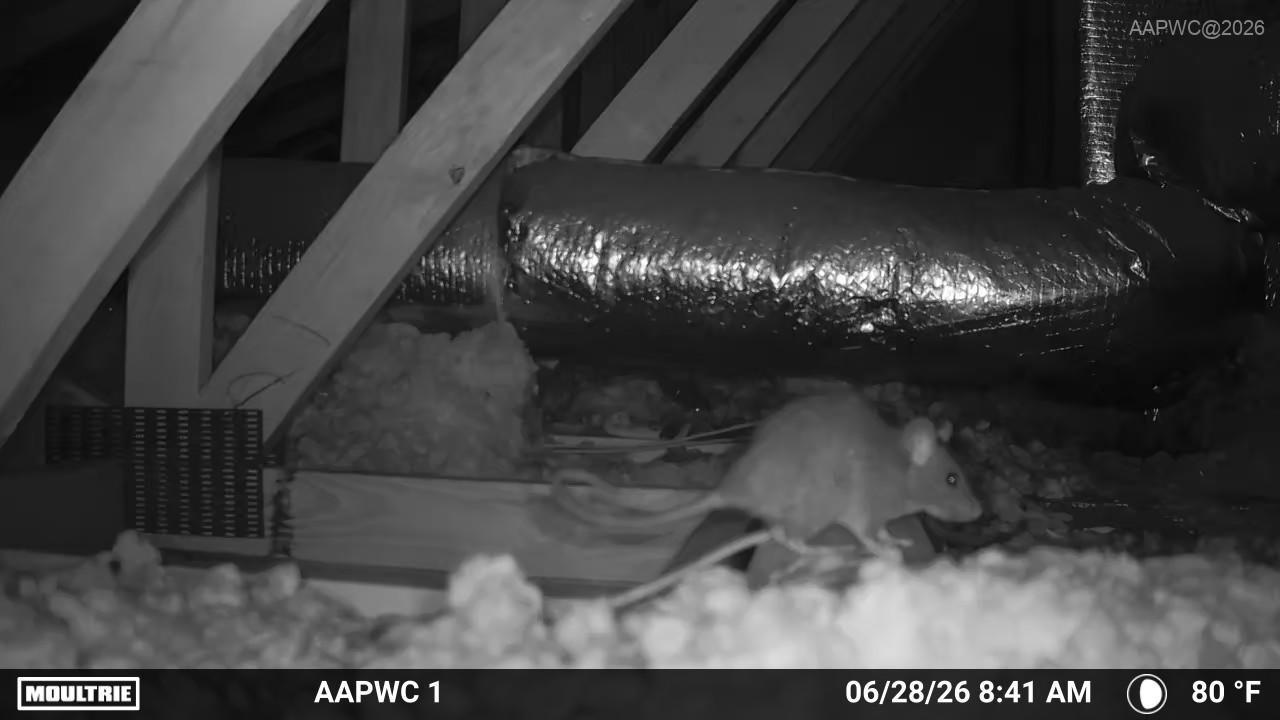
- Insulation has been disturbed by rodents or wildlife
- Previous contractors moved insulation and didn’t replace it evenly
- There are visible bare areas along the attic floor
- The home has undergone renovations
- You’re unsure what insulation was originally installed
None of these automatically proves insulation is the problem, but they’re good reasons to take a closer look.
What Happens When Rodents or Wildlife Disturb Insulation?
Insulation doesn’t always remain exactly where the installer put it. Rodents and wildlife can tunnel through, compress, move, nest in, and contaminate attic insulation. Contractors working on electrical, plumbing, HVAC, or other systems may also move insulation away from certain areas, leaving portions of the attic with inconsistent coverage. In more severe situations, contaminated or badly damaged insulation may need to be removed before new insulation is installed.
Attic Insulation Is a System, Not Just a Number
R-value is important, but it shouldn’t be viewed in isolation. A properly performing attic involves insulation, air sealing, ventilation, moisture management, and proper installation working together. A high R-value printed on an insulation package doesn’t help much if the finished installation has major gaps and voids — that’s why the condition of the entire attic matters, not just one number on a label.
Should You Have Your Attic Insulation Inspected?
If you’re unsure what’s above your ceiling, an attic inspection can give you a much clearer picture — identifying existing insulation conditions, uneven or insufficient coverage, disturbed insulation, evidence of rodents or wildlife, potential air-sealing opportunities, contamination, and other visible attic concerns.
You may discover that the existing insulation is perfectly adequate. Or you may discover that the attic isn’t performing the way you assumed it was. Either way, knowing is better than guessing based on the age of the house.
Knowing what’s actually happening in your attic beats guessing based on how old the house is.
Concerned About What’s Happening in Your Attic?
All American Pest & Wildlife Control provides attic inspection, insulation, and restoration solutions throughout Southeast Louisiana and the Mississippi Gulf Coast.